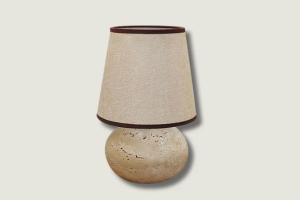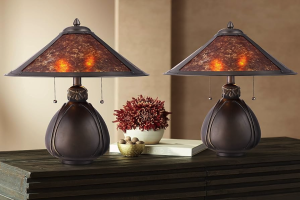
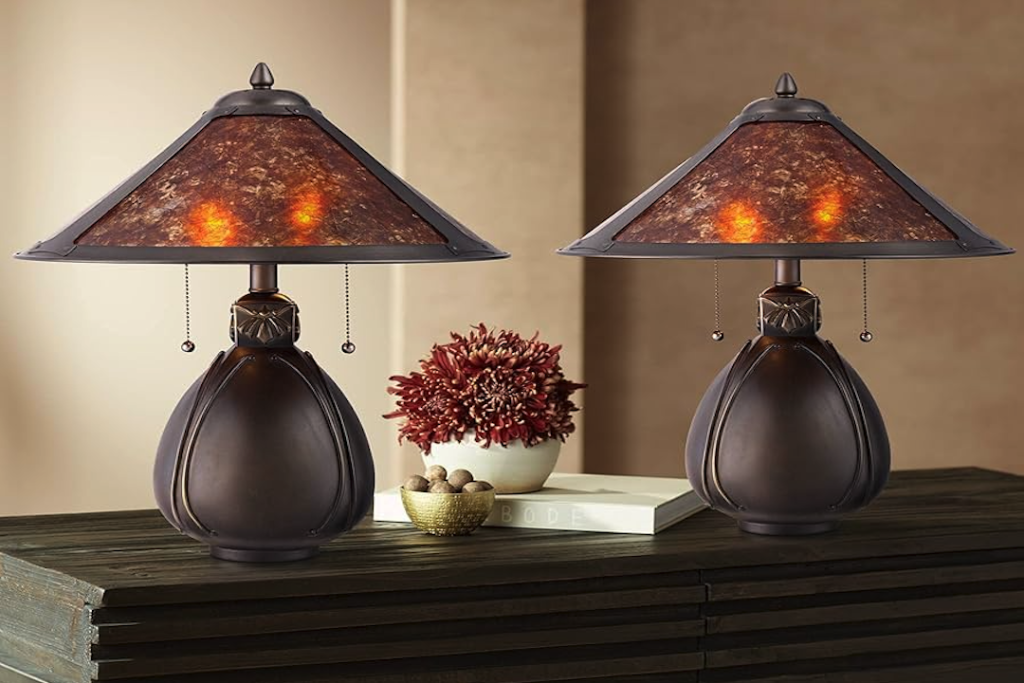
The Craftsman Mission style table lamp is a design characterized by its adherence to the principles of the Arts and Crafts movement. This style emphasizes honest construction, natural materials, and a rejection of ornate decoration in favor of functionality and handcrafted quality. Originating in the late 19th and early 20th centuries, the Mission style, and by extension, its furniture and lighting, sought to bring a sense of simplicity and authenticity back into domestic interiors. The table lamp, as a functional object, embodies these ideals through its robust construction, often made from solid wood and metal, and its straightforward, geometric design. Unlike the excessive ornamentation found in other periods, the appeal of a Craftsman Mission table lamp lies in its understated strength and enduring aesthetic. It serves not merely as a source of light but as a piece of functional sculpture, a quiet testament to a different era of design philosophy.
The Craftsman Mission style table lamp Idmhome did not emerge in a vacuum. Its development is intrinsically linked to the broader Arts and Crafts movement, a reaction against the industrialization and perceived decline in craftsmanship of the Victorian era. This movement championed the idea that objects should be made with skill, care, and an appreciation for their materials.
The Arts and Crafts Movement and its Tenets
The Arts and Crafts movement, which flourished in Britain and then spread to the United States, was fundamentally about a return to pre-industrial production methods and values. Key figures like William Morris and John Ruskin advocated for:
- Honesty in Materials: Using natural materials such as wood, metal, and glass in their unadulterated forms. The grain of wood, the texture of metal, and the imperfections inherent in handcrafted objects were to be celebrated, not hidden.
- Truth to Materials: Designing objects in a way that allowed the inherent qualities of the material to dictate the form.
- Functionality: Prioritizing the practical use of an object over purely decorative elements. Necessity was often the mother of invention in this context, but a refined necessity.
- Craftsmanship: Emphasizing the skill and dedication of the artisan. Mass production was viewed with suspicion, as it often led to uniformity and a dilution of individual skill.
- Simplicity and Restraint: Rejecting the fussy, elaborate, and often historically imitative ornamentation prevalent in Victorian design. Instead, the focus was on clean lines and a more direct expression of form.
The Mission Style as an American Interpretation
In the United States, the Arts and Crafts movement found a distinct expression in the Mission style. This style was particularly influenced by Spanish Colonial architecture and the functional aesthetic of mission churches in California. Designers like Gustav Stickley, a prominent proponent of the American Arts and Crafts movement, were instrumental in popularizing the Mission style.
Gustav Stickley and “The Craftsman” Magazine
Gustav Stickley’s furniture company and his influential publication, “The Craftsman” magazine, played a crucial role in disseminating the principles of the Craftsman aesthetic. Stickley’s designs emphasized sturdy construction, visible joinery, and the use of oak, often with a fumed or quarter-sawn finish that highlighted its prominent grain. The Craftsman workshops produced a range of household items, including lighting, that embodied these ideals. The table lamp, in this context, became a tangible representation of the movement’s philosophy for the everyday home. It was a tool for illumination, yes, but also a statement of taste and values.
Key Design Elements of Mission Furniture
Mission style furniture, and by extension, the lighting that accompanied it, shared a common set of design characteristics:
- Straight Lines and Rectangular Forms: A preference for geometric, rectilinear shapes, avoiding curves and elaborate scrollwork.
- Prominent Joinery: Mortise and tenon joinery, often left exposed, demonstrated the structural integrity and craftsmanship of the piece. This was not a flaw to be concealed but a feature to be admired.
- Slender and Tapered Elements: Legs and uprights were often tapered, providing a sense of visual lightness despite the solid materials.
- Minimal Decoration: Ornamentation, if present at all, was typically organic or geometric and carved directly into the wood, rather than applied.
- Natural Wood Finishes: A preference for finishes that enhanced the natural beauty and grain of the wood, such as stained or waxed finishes.
The table lamp, in its very structure, reflected these principles. A Mission table lamp might feature a solid wood base – often oak or mahogany – with clean, strong lines. The shade could be made of leaded glass, with geometric patterns or simple earthy tones, or a plain fabric, allowing the light to diffuse softly.
Design and Construction of Craftsman Mission Table Lamps
The inherent appeal of a Craftsman Mission table lamp lies in its construction and the materials used. These are not delicate ornaments but robust pieces designed for longevity and to showcase the inherent beauty of their components.
Materials Employed
The choice of materials is central to the Craftsman Mission aesthetic. The intention was to use substances that were readily available, durable, and visually appealing in their natural state.
Wood: The Foundation of the Design
Wood is arguably the most iconic material associated with Craftsman Mission furniture and lighting. Oak, particularly quarter-sawn white oak, was a favored choice due to its strength, durability, and striking, straight grain patterns that result from the milling process.
- Quarter-Sawn Oak: This specific cut reveals the medullary rays of the wood, creating a distinctive ribbon-like figure that adds visual interest without resorting to applied decoration. The open grain of oak also takes stains well, allowing for a range of natural wood tones.
- Other Woods: While oak was dominant, other hardwoods like mahogany, cherry, and walnut were also used, each offering its unique color and grain. The emphasis remained on showcasing the natural beauty of the wood.
- Joinery Techniques: Traditional hand-cut joinery, such as mortise and tenon joints, were not only structurally sound but also served as a design element, demonstrating the maker’s skill and the integrity of the construction. These joints were often visible, a deliberate choice to reveal the craftsmanship.
Metal Accents and Hardware
While wood often forms the primary structure, metal elements play a crucial supporting and decorative role in Craftsman Mission table lamps.
- Bronze and Brass: These metals, often finished in patinated bronze, oil-rubbed bronze, or antique brass, were commonly used for lamp bases, fittings, and hardware. Their muted, natural tones complemented the wood exceptionally well.
- Iron: For a more rustic or industrial feel, wrought iron was sometimes employed, particularly in more utilitarian designs.
- Functionality over Form: Metal components were typically designed to be functional, providing structural support or housing the electrical components, rather than being purely ornamental. Any decorative elements were usually integrated into the structure.
Glass: Diffusing Light and Adding Color
The selection of materials for the lamp shade was critical in shaping the lamp’s overall aesthetic and the quality of light it produced.
- Leaded Glass: This is perhaps the most recognizable type of shade associated with Craftsman Mission lamps. Composed of small pieces of colored glass held together by lead came, these shades often featured geometric patterns, abstract designs, or nature-inspired motifs (such as leaves or dragonflies). The interplay of light through the different colors and textures of the glass created a warm and inviting ambiance.
- Stained Glass: Similar to leaded glass, stained glass involves pieces of colored glass fused together, but with a focus on creating more intricate images or pictorial scenes.
- Fabric Shades: Simpler designs might utilize fabric shades, often in muted, natural tones like linen, burlap, or silk. These shades provided a softer, more diffused light, emphasizing the lamp’s role as an ambient light source. The fabric was often stretched taut over a simple frame.
- Micromosaic Glass: In some higher-end examples, micromosaic glass, composed of tiny tiles, could be used to create complex patterns.
Structural Integrity and Aesthetics
The construction methods employed in Craftsman Mission table lamps were as important as the materials themselves. The emphasis was on building objects that were both beautiful and enduring.
Dovetail Joinery and Mortise and Tenon Joints
These traditional woodworking techniques were a hallmark of the Craftsman style.
- Dovetail Joints: Often used to join drawer boxes or panels, dovetails are interlocking trapezoidal pins and tails that create a strong mechanical lock. Their distinctive appearance was often left visible.
- Mortise and Tenon Joints: This classic joint involves a tenon (a projection on the end of a piece of wood) fitting into a mortise (a hole or slot in another piece). This provided significant strength and was a key feature in the construction of lamp bases and supporting structures. Visible tenons, sometimes with wedges driven through them, are a characteristic detail.
The Importance of Handcraftsmanship
The Arts and Crafts movement and its American iteration, the Mission style, placed a high value on handcraftsmanship. While some elements might have been mass-produced, the ideal was that much of the work was done by skilled artisans.
- Artisan’s Touch: This meant that no two pieces were perfectly identical. Slight variations in wood grain, the subtle differences in how a shade was assembled, or the hand-rubbed finish all contributed to the unique character of each lamp.
- Durable Construction: The focus on robust joinery and sturdy materials meant that these lamps were built to last for generations, a stark contrast to the disposable nature of some modern furnishings.
- Visible Evidence of Labor: The deliberate exposure of joinery or subtle tooling marks served as a visible testament to the human effort involved in creating the object. This was a conscious rejection of the seamless, machine-made finish.
The tactile quality of a Craftsman Mission table lamp is as important as its visual appeal. The feel of the solid wood, the cool touch of the metal, and the diffusion of light through the glass all contribute to a sensory experience that speaks to a connection with the maker and the materials. It’s about experiencing the lamp not just as an object, but as a product of thoughtful creation.
Distinctive Design Features
Craftsman Mission table lamps are recognizable by a consistent set of design characteristics that are deeply rooted in the principles of the Arts and Crafts movement. These features distinguish them from styles of other periods, offering a particular kind of visual and functional appeal.
Geometric Simplicity and Straight Lines
The preference for rectilinear forms is a defining characteristic of the Mission style.
- Rectangular and Square Bases: Lamp bases are typically square, rectangular, or hexagonal, constructed from solid wood or metal. They often feature a substantial feel, conveying stability and permanence.
- Straight Uprights and Posts: Vertical elements, if present, are usually straight and unadorned, leading the eye upward in a clear, uncluttered manner. Tapering is sometimes used to add a subtle dynamic.
- Absence of Ornate Curves: Unlike the flowing lines of Art Nouveau or the elaborate carvings of Rococo, the Mission style eschews gratuitous curves. Any shaping is usually in service of functionality or a simple geometric emphasis.
Emphasis on Natural Wood Grain and Texture
The inherent beauty of the wood used for the base and structure is a primary design element.
- Showcasing the Grain: The choice of quarter-sawn oak, with its prominent medullary rays, is a prime example of this. The wood grain is not hidden but is often the most visually engaging aspect of the lamp.
- Natural Finishes: Finishes are typically applied to enhance, rather than mask, the natural color and texture of the wood. Stains are used to achieve rich, earthy tones, and a hand-rubbed oil or wax finish provides a subtle sheen and protects the wood.
- Visible Joinery: As previously mentioned, joinery such as mortise and tenon or dovetails are often left exposed. This not only demonstrates the quality of construction but also adds a textural and visual detail that is inherent to the design, a visual signature of the craftsman’s hand.
Leaded Glass and Geometric Shading
The lamp shade is a critical component, both functionally and aesthetically, in the Craftsman Mission table lamp.
- Geometric Patterns: Shaded are frequently composed of individual pieces of colored glass assembled into geometric motifs. Diamonds, squares, rectangles, and trapezoids are common shapes.
- Earthy and Muted Tones: The color palettes for the glass are usually inspired by nature, featuring greens, ambers, browns, blues, and earthy reds. These colors create a warm and inviting glow when the lamp is illuminated.
- Nature-Inspired Motifs: While geometric patterns dominate, some shades incorporate stylized natural elements like leaves, vines, or insects, rendered in a simplified, geometric manner.
- Simplicity of Form: The overall shape of the shade is often straightforward – conical, square, or rectilinear – to complement the base. The complexity lies within the glasswork itself.
Functionality and Practicality
Underpinning all aesthetic considerations is a commitment to practicality and usefulness.
- Ample Illumination: The design of the shade and the socket arrangement are intended to provide sufficient light for reading or other close-up tasks, befitting a table lamp.
- Sturdy and Stable Base: The substantial bases ensure that the lamp is stable on a tabletop, a practical consideration for daily use.
- Ease of Use: Switches and controls are typically integrated discreetly and intuitively, allowing for easy operation.
These features combine to create a lighting fixture that is not only functional but also possesses a quiet, enduring beauty. The Craftsman Mission table lamp is a piece that invites contemplation of its construction and its place within a designed space. It’s a beacon of deliberate design in an often chaotic world of fleeting trends.
Placement and Versatility in Interior Design
While the Craftsman Mission style table lamp is historically situated, its design principles lend it a remarkable versatility that allows it to integrate seamlessly into a variety of interior design schemes. Its understated elegance and commitment to quality resonate across different aesthetic preferences.
Traditional and Period-Appropriate Settings
The most natural home for a Craftsman Mission table lamp is, of course, in a room decorated in a similar style.
- Arts and Crafts or Mission Interiors: In homes designed with an Arts and Crafts or Mission aesthetic, these lamps serve as an authentic and cohesive element. They complement oak furniture, natural wood finishes, and the overall emphasis on craftsmanship and simplicity.
- Complementary Architectural Styles: Properties with Craftsman, Bungalow, or Prairie Style architecture are natural settings. The design of the lamp echoes the architectural details of the building.
- Enhancing Authenticity: For those seeking to recreate or preserve the feel of a specific historical period, these lamps are indispensable for achieving an accurate and immersive atmosphere.
Modern and Transitional Spaces
The enduring appeal of the Craftsman Mission table lamp extends beyond its historical context. Its clean lines and emphasis on natural materials make it surprisingly adaptable to contemporary interiors.
- Adding Warmth to Modern Minimalism: In a stark, minimalist modern room, a Mission table lamp can introduce a much-needed element of warmth and texture. The rich wood tones and diffuse light from the glass shade offer a counterpoint to sleek surfaces and cool color palettes.
- Transitional Eclecticism: For those who favor a transitional style, blending elements from different eras, a Mission lamp can serve as a grounding piece. Its substantial presence and understated design prevent it from being overly dominant, allowing it to coexist with other styles.
- Creating Focal Points: A well-placed Mission lamp can act as a focal point in a room, drawing attention through its quality and design. It can be used to highlight a reading nook, a side table, or an entryway.
Specific Room Applications
The functional nature of a table lamp means it has a role to play in virtually any room of the house. The Craftsman Mission style only enhances its utility.
Living Rooms and Dens
- Task Lighting for Reading: Placed on a side table next to an armchair or sofa, it provides focused light for reading.
- Ambient Lighting: The diffused glow from the shade can contribute to a relaxed and inviting atmosphere in the living area.
- Decorative Accent: Even when not in use, its solid form and attractive materials add visual interest to the room’s decor.
Bedrooms
- Bedside Tables: A classic placement, offering convenient light for reading in bed or for general illumination without being too harsh.
- Dressers and Vanities: A smaller Mission lamp can add a touch of elegance and functionality to a dresser or vanity.
Dining Rooms and Entryways
- Buffet or Sideboard: On a buffet or sideboard, a Mission lamp can provide a warm glow and an attractive decorative element, particularly in rooms where overhead lighting might be too harsh.
- Entryway Console Table: A lamp on an entryway console table offers a welcoming illumination for guests and a practical spot to place keys or mail.
Home Offices and Studies
- Desk Lighting: A well-proportioned Mission lamp can provide excellent task lighting for a desk, contributing to a focused and productive work environment.
- Aesthetic Harmony: It complements wooden desks and shelving, reinforcing a sense of order and traditional craftsmanship.
The versatility of the Craftsman Mission table lamp lies in its ability to anchor a space with its inherent quality and timeless design. It doesn’t shout for attention but rather commands it through its solid construction and thoughtful aesthetic. It serves as a reliable, beautiful source of light, a silent partner in creating a well-appointed and comfortable environment, regardless of the dominant style. It’s a piece that demonstrates that true elegance often lies in simplicity and integrity.
Craftsmanship and Authenticity: Identifying a Genuine Piece
The enduring desirability of Craftsman Mission style table lamps has unfortunately led to the production of reproductions and imitations. Distinguishing an authentic piece from a modern interpretation requires an understanding of the hallmarks of genuine craftsmanship from the Arts and Crafts era.
Historical Timestamps and Maker’s Marks
Genuine antique Craftsman lamps often bear the marks of their creators.
- Manufacturer’s Labels or Stamps: Many prominent Arts and Crafts furniture and lighting manufacturers, such as Gustav Stickley, L. & J.G. Stickley, and Charles P. Limbert, applied metal tags, paper labels, or impressed stamps to their products. These should be examined for size, font, and placement.
- Serial or Model Numbers: Some pieces may have serial or model numbers that can be researched or used to verify authenticity against manufacturer records or historical catalogs.
- Signatures of Artisans: In some rare cases, individual artisans might have signed or marked their work, especially for highly custom or commission pieces.
Examination of Materials and Construction Techniques
The materials used and the way a lamp is constructed are key indicators of its age and authenticity.
Wood: Patina and Joinery
- Patina: Older wood develops a unique patina over time – a soft sheen and depth of color resulting from oxidation, handling, and exposure to light. This is distinct from the fresh, uniform finish of a reproduction. Look for subtle darkening in crevices or areas of higher wear.
- Wear Patterns: Authentic antique lamps will exhibit signs of age and use. Look for gentle wear on edges, corners, and areas that would have been touched frequently. This wear should be consistent with the object’s expected history, not artificial distressing.
- Joinery Integrity: Examine the joinery. While reproductions might mimic mortise and tenon or dovetail joints, antique pieces will show the tool marks of hand-craftsmanship. The fit should be precise but not unnaturally perfect, indicative of skilled but not machine-perfect execution. Look for evidence of old glue or shrinkage that is consistent with age.
Metal: Oxidation and Finish
- Oxidation and Patina: Metal components on authentic lamps will show natural oxidation and patina, often varying in tone and depth. Oil-rubbed bronze, for instance, will have developed a rich, dark color with highlights where it has been handled.
- Solid Construction: Older metalwork is typically solid and substantial. Thin, hollow castings or lightweight materials can be indicators of a newer piece.
- Original Finishes: Original finishes can be difficult to preserve. Look for signs of wear on raised areas or corners, and an overall feel of age to the finish. Refinished pieces are less desirable for collectors, but the underlying construction still offers clues.
Glass: Characteristics ofAntique Glass
- Hand-Blown or Cast Glass: Older leaded glass or stained glass shades may exhibit slight variations in thickness, small bubbles, or imperfections that are characteristic of hand craftsmanship. Machine-made glass tends to be more uniform.
- Lead Came: The lead channels holding the glass pieces should appear aged and may show signs of oxidation or slight deformation. New lead came will be bright and uniform.
- Color Variations: The colors in antique glass can be richer and more varied in their depth and hue compared to modern reproductions, which may appear flatter or overly bright.
Electrical Components and Wiring
The electrical components of a lamp are a significant indicator of its age.
- Original Wiring: Authentic antique lamps will have older wiring, often cloth-covered. However, for safety reasons, antique lamps may have been rewired. If rewired, look for professional workmanship and the use of appropriate modern components that do not detract from the lamp’s overall aesthetic.
- Sockets and Switches: The style of the light sockets, switch mechanisms (e.g., turn knob, pull chain), and internal wiring can provide clues. Older components will typically show signs of age and wear. However, replacement parts are common and should be assessed for their quality and how well they integrate with the original design.
Provenance and Documentation
For high-value antique pieces, provenance can be crucial.
- Purchase Records: Original sales receipts or documentation from reputable dealers can support the authenticity of a piece.
- Family History: A lamp passed down through a family, with a clear history of ownership, provides strong anecdotal evidence of its age and authenticity.
- Expert Appraisal: For significant investments, consulting with an expert appraiser specializing in Arts and Crafts furniture and lighting is advisable.
While a reproduction can offer the aesthetic appeal of the Craftsman Mission style, it is the genuine article that tells a story of a specific time and place, a testament to the enduring values of craftsmanship and design. It’s about connecting with a past that valued substance and skill, a tangible link to an earlier era of home furnishing.
Enduring Appeal and Value
The Craftsman Mission style table lamp continues to hold significant appeal and value in contemporary design markets. Its enduring popularity is not a fleeting trend but a reflection of its inherent qualities and its ability to transcend stylistic boundaries. Understanding this appeal is key to appreciating its place in interior design and the collector’s market.
Timeless Aesthetics
The core design principles of the Craftsman Mission movement—simplicity, honesty in materials, and functional elegance—are qualities that resonate across generations.
- Rejection of Ephemerality: Unlike styles that are heavily tied to specific fads, the clean lines and natural materials of the Mission style offer a sense of permanence. It does not feel dated but rather possesses a classic quality.
- Adaptability: As discussed in its placement, the lamp’s design allows it to adapt to various interior styles, from historically accurate settings to more eclectic and modern homes. This adaptability ensures its continued relevance.
- Quiet Sophistication: The understated elegance of a Mission lamp means it contributes to a room’s atmosphere without dominating it. It speaks of considered design and quality rather than ostentatious display.
Quality of Construction and Durability
The emphasis on robust construction using high-quality materials has resulted in many Craftsman Mission table lamps surviving for over a century.
- Investment in Longevity: These lamps were built to last. The solid wood, meticulously joined, and the durable metal components mean they can withstand the test of time and use. This durability translates into a lasting value.
- Heirloom Potential: Unlike many modern mass-produced items, a genuine Craftsman Mission table lamp is often considered an heirloom piece, intended to be passed down through generations. This inherent value enhances its desirability.
- Sustainable Design: In an era increasingly focused on sustainability, the enduring nature of these lamps aligns with principles of reducing consumption and valuing objects designed for longevity.
Collectibility and Market Value
Genuine antique Craftsman Mission style table lamps are highly sought after by collectors and enthusiasts.
- Rarity: While many were produced, surviving authentic pieces, particularly those by renowned makers like Gustav Stickley or unique designs, are becoming increasingly rare. Rarity contributes significantly to market value.
- Demand from Period Enthusiasts: Individuals dedicated to preserving or emulating the Arts and Crafts period represent a steady demand for authentic items.
- Design Movement Appeal: The broader appreciation for the Arts and Crafts movement and its contribution to design history elevates the status and value of its artifacts.
- Investment Potential: For many collectors, these lamps represent not only an aesthetic investment but also a financial one, with values appreciating over time, especially for well-preserved or particularly desirable examples. Prices can range significantly depending on the maker, condition, rarity, and design details.
The Craftsman Mission style table lamp is more than just a light source; it is a piece of functional art, a historical artifact, and a testament to a design philosophy that valued integrity and enduring quality. Its appeal lies in its ability to bring a sense of groundedness, warmth, and sophisticated simplicity to any space. It continues to illuminate homes and hearts with its timeless elegance and the quiet dignity of well-made objects. It is a beacon of enduring taste, a reliable presence in the ever-shifting landscape of interior design.