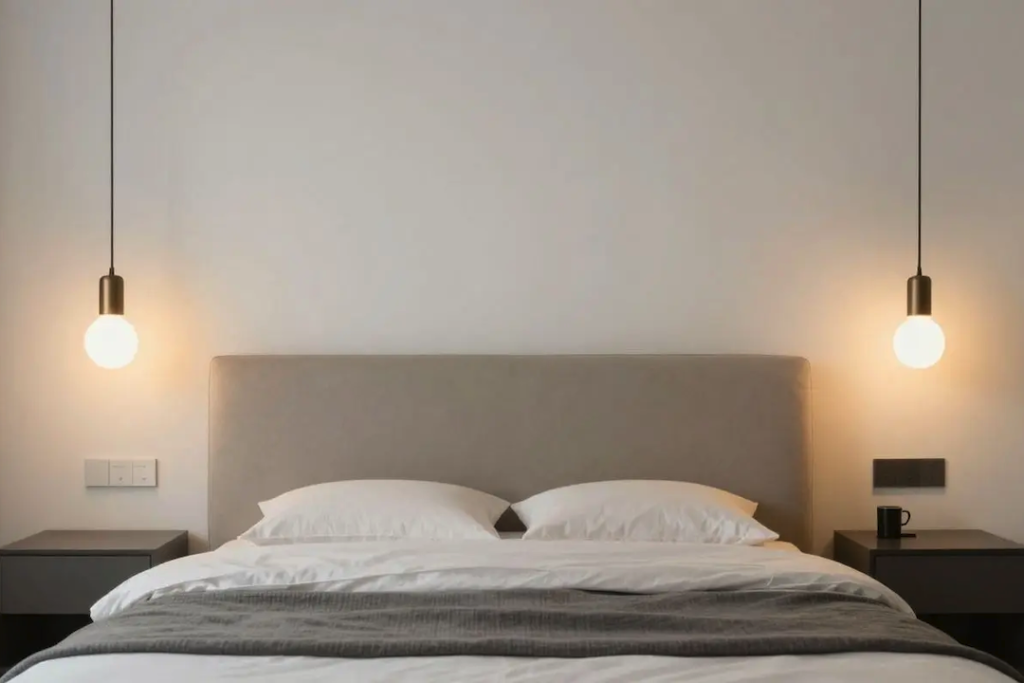
Tired of bedside clutter and the never-ending quest for more space? A hanging bedside pendant light might be your new best friend. Seriously, it’s a game-changer for smaller bedrooms or anyone who just wants a cleaner, more minimalist sleeping area. Instead of a clunky table lamp hogging precious real estate on your nightstand, a pendant light floats elegantly above, freeing up that surface for books, a glass of water, or whatever else you actually need within arm’s reach.
This isn’t just about aesthetics, though that’s a nice bonus. It’s truly a practical solution for maximizing your existing space and creating a more functional, less cluttered bedroom.
Let’s be real, bedrooms are often the smallest rooms in the house, and bedside tables can quickly become a dumping ground. A pendant light Omelighting tackles this head-on by simply removing the lamp from the table equation.
Reclaim Your Nightstand Space
Think about it: that bulky lamp base, the shade that always seems to get in the way. With a pendant, all that dissapears. Suddenly, your nightstand has more room for your phone, a cup of tea, your current read, or even just nothing at all – which can be a wonderfully liberating feeling. This is particularly useful in tight spaces where a full-sized nightstand might barely fit. Even if you have a larger nightstand, free space always feels good.
Optimized Lighting for Reading
Ever tried to read in bed with a traditional table lamp and found the light either too dim, too bright, or casting weird shadows? Hanging pendants can often be positioned much more effectively.
Directing the Light
When installed correctly, a pendant light can provide much more focused and direct illumination for reading. You can hang it at the perfect height so the light falls exactly where you need it on your book or e-reader, without spilling too much onto your partner’s side of the bed if they’re trying to sleep. This targeted lighting reduces eye strain and makes evening reading a more comfortable experience.
Adjustable Options
Some pendant lights even come with adjustable cords or articulating arms, allowing you to fine-tune the height and angle of the light. This flexibility means you can adapt the lighting to your specific needs, whether you’re sitting up to read or lounging back a bit.
Enhancing Bedroom Aesthetics and Flow
Beyond the practical benefits, a well-chosen pendant light can significantly elevate the look and feel of your bedroom. It’s a design element in itself.
Adding a Touch of Modernity
Table lamps, while classic, can sometimes feel a bit traditional or even dated. A pendant light, especially with a sleek, minimalist design, instantly injects a modern, contemporary vibe into your bedroom. It adds an architectural detail that draws the eye upward.
Creating a Sense of Openness
By removing clutter from the nightstand and having illumination float from above, the room can feel more open and airy. This visual lightness is a huge win, especially in smaller rooms where every bit of perceived space counts. It contributes to a less “heavy” feeling in the room.
A Focal Point and Statement Piece
Depending on your chosen design, a pendant light can act as a significant decorative element. Whether it’s a dramatic geometric shape, a soft textile shade, or a minimalist clear glass design, it becomes part of the room’s personality. It’s an opportunity to express your style.
Choosing the Right Pendant Light
So, you’re convinced. But with so many options out there, how do you pick the perfect one? It comes down to a few key considerations.
Size and Scale
This is crucial. A giant pendant will overwhelm a small bedroom, while a tiny one will look lost.
Rule of Thumb for Height
Generally, you want the bottom of the pendant shade to be roughly 28-36 inches above your nightstand surface. This height ensures the light is well-positioned for reading without being in your direct line of sight when sitting up in bed. If you don’t have a nightstand, measure from the approximate height where your head would rest.
Considering Room and Bed Size
If you have a king-sized bed, you might opt for slightly larger pendants or even a pair of identical ones to balance the scale. For a twin bed, a single, smaller pendant is usually sufficient. Pay attention to the width of the pendant – you don’t want it to feel like it’s encroaching too much on the accessible space around your bed.
Material and Style
This is where your personal aesthetic comes into play. The material and style of your pendant light can dramatically influence the overall feel of your bedroom.
Matching Your Existing Decor
Do you have a rustic farmhouse vibe? Perhaps a pendant with a woven shade or distressed metal would work. Is your room minimalist and modern? Sleek, metallic, or glass designs would fit perfectly. A bohemian room might embrace macrame or bamboo. The goal is cohesion, even if you want a slight contrast.
Considering Light Diffusion
The material of the shade will dictate how the light is distributed.
- Opaque shades (metal, solid fabric): These direct light downwards, creating a more focused beam. Great for reading, but might make the overall room feel a bit darker if it’s your primary light source.
- Translucent shades (frosted glass, linen): These diffuse the light gently, creating a softer, ambient glow that illuminates more of the surrounding area.
- Clear shades (clear glass): These showcase the bulb itself and provide bright, unhindered light. Choose a decorative or warm-toned bulb if going this route to avoid harshness.
Installation Type
How you plan to get power to your pendant is as important as its look.
Hardwired Pendants
These are wired directly into your home’s electrical system, usually controlled by a wall switch. This is the cleanest, most permanent option and is ideal if you’re building, renovating, or comfortable hiring an electrician. They offer a seamless, wire-free look.
Plug-In Pendants
If you’re renting, on a budget, or simply don’t want to deal with electrical work, plug-in pendants are a fantastic alternative. They come with a cord that plugs directly into a wall outlet.
Hiding the Cord
While super convenient, the cord needs to be managed. You can:
- Run it discreetly down the wall and secure it with clear adhesive clips.
- Use a decorative cord cover that blends with your wall.
- Embrace the cord as part of the industrial aesthetic by using a braided fabric cord in a contrasting color and letting it hang visibly.
Smart Features and Bulb Compatibility
Don’t forget the light source itself and any added functionalities.
Dimmer Switches
Absolutely essential for a bedside light. A dimmer allows you to adjust the brightness from bright enough for reading to a soft, ambient glow for winding down. This enhances both comfort and versatility.
Smart Bulbs
If you’re into smart home tech, consider using smart bulbs. These can be controlled via an app, voice commands, or even set on schedules. You can change their color temperature (warm white for evenings, cooler white for daytime tasks), dim them, and turn them on/off remotely.
Bulb Kelvin Temperature
For a bedroom, aim for bulbs in the 2700K to 3000K range (warm white). This color temperature is relaxing and conducive to sleep, unlike harsher, bluer light.
Installation Considerations
Alright, you’ve picked your perfect pendant. Now, how do you get it up there?
Planning the Placement Carefully
Before you drill or commit, visualize. Sit in your bed. Where do you typically read? Where does your head rest? Mark the wall or ceiling with painter’s tape to get a visual idea of the height and horizontal position.
Centering vs. Off-Centering
Do you want the light directly centered over your nightstand, or slightly off-center for a more artistic look? If you have two pendants, ensure they are symmetrically placed relative to your bed.
Measuring from the Bed’s Edge
It’s often more intuitive to start measuring from the edge of your bed, rather than the wall, as this relates directly to where you’ll be using the light.
Electrical Work for Hardwired Options
This is where calling in a professional electrician is often the best (and safest) choice unless you are highly experienced.
Running New Wiring
If there isn’t an existing electrical box in the ceiling or wall where you want your pendant, new wiring will need to be run. This can involve cutting into drywall and patching, which an electrician is well-equipped to handle.
Installing a Ceiling Box
A proper electrical box is needed to safely secure the pendant fixture and make the electrical connections. This ensures stability and compliance with electrical codes.
DIY for Plug-In Pendants (Safely)
Plug-in pendants are much more DIY-friendly, but still require a thoughtful approach.
Secure Mounting
Even without electrical wiring, you’ll need to securely mount the pendant. This usually involves:
- Ceiling hook: For pendants hanging from the ceiling. Make sure it’s rated for the weight of your light fixture.
- Wall bracket/arm: For pendants that extend from the wall. Again, ensure it’s robust enough.
- Drywall anchors: If you’re not drilling into a stud, use appropriate drywall anchors to hold the screws firmly.
Cord Management
As mentioned, plan how you’ll route the cord. Conceal it with cord covers, run it behind furniture, or embrace it as a decorative element. Ensure it’s not a tripping hazard and isn’t taut, which could pull the light down.
Pendant Lights vs. Other Bedside Lighting
While pendants are fantastic, it’s worth a quick comparison to understand why they might be the best fit for you.
Eliminating Table Lamps
The primary advantage: reclaiming valuable nightstand space. Table lamps take up a significant footprint, which can be an issue in smaller rooms or for minimalists.
Overcoming Wall Sconces
Wall sconces are another space-saving option, and they share some benefits with pendants. However, pendants often offer more flexibility in terms of positioning.
More Flexible Placement
Sconces are fixed to the wall. Pendants can hang from the ceiling, allowing them to be positioned further out from the wall, more directly over your head or closer to the center of the bed, which can be ideal for reading. Some pendants even have longer arms if installed as “wall-mount” types, achieving a similar reach.
Visual Interest and Depth
Because they hang freely, pendants can add more visual depth and a sculptural quality to a room compared to a wall-mounted sconce, which often lies flatter against the wall.
The Power of Two Pendants
Don’t limit yourself to just one! If you share your bed, or simply want balanced lighting, two pendants are often the perfect solution.
Individual Control
If each pendant is on its own switch or dimmer, you and your partner can customize your lighting independently. One can read brightly while the other enjoys a dim, ambient glow, or even complete darkness on their side.
Aesthetic Symmetry
Two identical pendants flanking the bed create a beautiful sense of symmetry and balance in the room, enhancing the overall design.
Maintenance and Care
Pendant lights, like any fixture, will benefit from a little TLC.
Regular Cleaning
Dust is the enemy of all light fixtures. Regularly wipe down the shade and bulb with a soft, dry cloth. For glass shades, a mild glass cleaner can restore their sparkle. For fabric shades, a lint roller or light vacuum attachment works wonders.
Bulb Replacement
When a bulb blows, ensure you replace it with one of the correct wattage and base type specified by the manufacturer. If you’re using smart bulbs or specific LED types, stick to those.
Inspecting Wiring (Hardwired)
Every now and then, if you’re comfortable and the power is off, a quick visual check of the wiring connections (if accessible without removing the entire fixture) can be wise, especially if you notice any flickering or issues. For plug-in lights, check the cord for any fraying or damage.
In conclusion, ditching your bulky table lamp for a hanging bedside pendant light is a smart move for anyone looking to optimize space, improve lighting, and add a touch of style to their bedroom. It’s a functional upgrade that genuinely makes a difference to the usability and aesthetic appeal of your personal sanctuary.